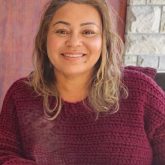


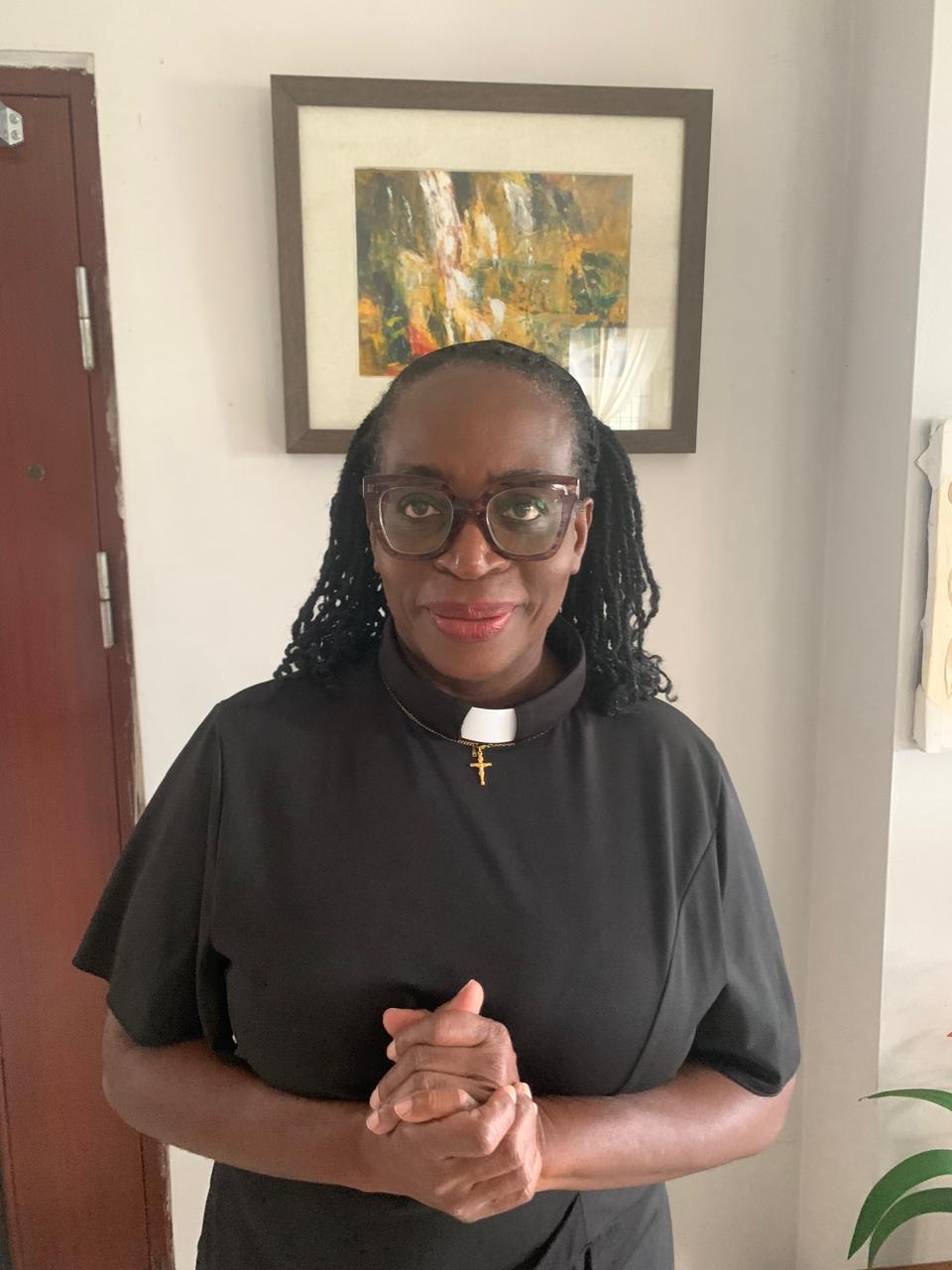
After thirty years as a Consultant Anaesthetist, Dr. Vivienne Mitchell-Amata answered a call—a call to serve. She was ordained a Deacon in the Anglican Church in December 2025.
Already entrusted with humanity’s most critical, entering the clergy felt like a natural extension of her work: to serve society. She has always held a strong faith, which has guided her throughout her life.
Dr. Vivienne Amata (née Mitchell) was born in Jamaica to Guyanese parents and spent part of her childhood overseas. In Guyana, she and her siblings attended St. Gabriel’s Primary School before moving on to The Bishop’s High School.
Dr. Amata reflects on a quote by Sir William Osler (1849–1919), a Canadian physician and one of the forefathers of modern medicine: “It is more important to know what sort of person has the disease than what kind of disease the person has.”
“Sometimes, patients just want to be listened to,” she says. She always makes the effort to talk with and get to know her patients—often by interviewing relatives in the ICU as part of her assessment—rather than seeing them simply as a collection of organs.
In addition to her medical qualifications, Dr. Amata holds a Master’s degree in Public Health from the University of London and a Diploma in Theology. Along with Dr. Alexandra Harvey (Head of Anaesthesia, Georgetown Public Hospital) and Dr. Monica Odwin-Sagala, she helped train Registered Nurses and Physicians in the specialty of anaesthesia.
Dr. Amata also served as a volunteer organist at her church (intermittently over the past 40 years in Jamaica, Georgetown and Tobago, from student days to the present) and later became a Lay Minister. This anaesthetist is not numb to God’s calling.
However, these accomplishments did not come easily, and her journey was far from smooth sailing. As a young girl, Vivienne did not aspire to become a doctor. She wanted to be a schoolteacher, a musician, and even a nun. Her vision was of classrooms filled with musical instruments. She has a keen interest in studies linking music to academic performance. Her life has always been filled with music, alongside an aptitude for mathematics and an inclination toward medicine. Her father, the late Dr. Gladstone Mitchell, a physician, was her greatest inspiration.
While in high school, Dr. Amata took GCE O’ Level Music privately. She sang in the choir, played the piano and violin, and was part of the orchestra.
After completing her GCE A’ Levels in Physics, Chemistry, Biology, and Mathematics, she was accepted into the University of the West Indies (UWI) Medical School in Jamaica. She graduated with a Bachelor of Medicine and Surgery in 1988 and later earned her doctorate in Anaesthesia in 1995. Dr. Amata readily admits that medical studies came with their fair share of challenges.
One of the more intriguing experiences of her career occurred at Glasgow Royal Infirmary, Scotland, where she was part of a heart transplant team. The donor heart was flown into a nearby airport. As a young anaesthetist, she witnessed firsthand the advanced techniques and the level of coordination required as medical professionals worked diligently while a patient’s life hung in the balance. She describes it as a remarkable experience.
At the time, Guyana was experiencing an acute shortage of anaesthetists and was heavily reliant on foreign specialists. Dr. Amata decided it was time to return home in 1996. Along with Dr. Harvey and Dr. Odwin-Sagala, she became one of the only fully qualified Guyanese anaesthetists at the Georgetown Public Hospital (GPH), the country’s largest hospital.
Together, they launched a training programme for Registered Nurses to specialize in anaesthesia. Spearheaded by Dr. Harvey and guided by Dr. Odwin-Sagala’s thesis, the programme determined the number of nurses needed. This initiative coincided with the opening of a new wing at GPH, equipped with life support systems, modern operating rooms, and a new ICU. It was an exciting time for all.
The two-year programme consisted of several modules, combining both theoretical and practical assessments. Upon graduation, participants completed a six-month internship. The three doctors carefully determined which cases the newly qualified Nurse Anaesthetists could manage, while maintaining supervision. Any participant who failed a module was notified to leave the programme.
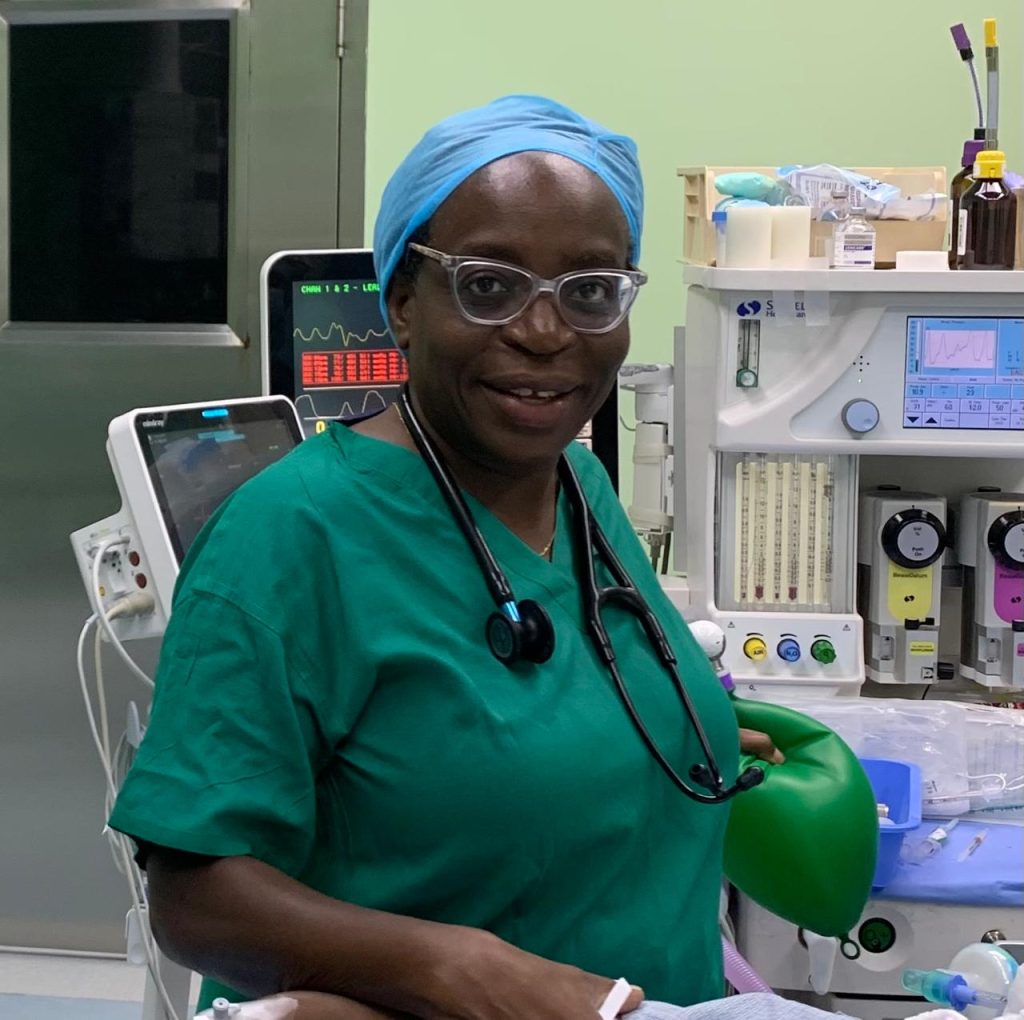
Anaesthesia involves the controlled use of gases and drugs to block sensation, allowing patients to undergo surgery without pain. The anaesthetist administers these drugs with precision, following strict guidelines. Dosages are tailored to each patient’s physiology and medical conditions—whether the patient is a child, elderly, asthmatic, hypertensive, or has a heart condition.
Procedures may range from Caesarean sections and trauma-related surgeries to abdominal, chest, or neurosurgical operations. Throughout, the anaesthetist continuously monitors vital organs—the brain, heart, lungs, liver, and kidneys—to ensure they function optimally.
A significant part of the role involves managing breathing and administering gases to maintain unconsciousness. Some drugs act as muscle relaxants to keep the patient immobile during surgery.
The most critical responsibility is ensuring that patients are rendered unconscious safely—and awakened safely.
This was the standard they now had to teach.
The programme continues today, producing well-trained physician and nurse anaesthesia providers who serve throughout most of the country.
It is the anaesthetist who keeps you safe and alive during surgery.
Dr. Amata has three children and acknowledges the challenge of balancing family life with her professional duties, church commitments, hobbies, and other activities. She strongly advocates for cultivating interests beyond one’s profession. Her latest pastime is ballroom dancing. She also swims and played table tennis, chess and ran track competitively while at UWI. She ensured her children were involved in sports as well.
She reflects on the complexity of balancing motherhood while caring for patients in their most vulnerable states. She maintained backup babysitters while on call, knowing she might be urgently needed—for a heart attack case or an emergency Caesarean section at 2 a.m. She hits the ground running; sometimes she drops to her knees—but not because she has tripped.
It is difficult to overlook her excellent diction. At Bishop’s High School, she won the inter-house elocution competition, and won the Gobin’s Inter-School Quiz Competition. She now serves as chairman of the music association in her community.
Her passions outside of medicine—music and education—remain evident. She is particularly concerned about declining literacy among younger generations and uses her voice to advocate for change. While wearing her Deacon’s hat, she admires countries that have implemented age-related restrictions on social media and have reverted to traditional teaching methods, emphasizing textbooks and writing.
Within her clerical role, she focuses on supporting the relatives of patients facing end-of-life situations.
She does not believe in corporal punishment at any level. Instead, she completed a parenting course called “Love and Logic,” which promotes alternative approaches to raising children.
Interestingly, the medical profession did not carry into the next generation. At university, one child pursued psychology, another mathematics and the last one a double major in mathematics and music with a minor in French.
Dr. Vivienne Amata, Deacon, exemplifies patience, compassion, and a deep commitment to service. She possesses an innate desire to care for humanity with dignity and grace, leading by example. Through both medicine and ministry, she extends faith, compassion, and confidence—steadfast in her belief that she is making a difference.