

Pandit Shivprasad Sharma used to ride past Queens College on his donkey cart on his way home to Kitty, where he sold loose grass to local cattle herders to support his wife and children. Every day he said a prayer for him to make everything possible within his means for his sons to attend this school, because he never had the opportunity.
All of his sons gained entry to Queens College. Deen, the third son of five children, became a renowned surgeon.
Dr. Sharma grew up on Sandy Babb St, and attended Kitty Methodist Primary School (later renamed J. E Burnham Primary), where a former President’s father was the school principal.
Dr. Sharma had an innate feeling to “help the sick and hurting humans,” and after a successful application to Trinity College School of Medicine, Dublin, Ireland, the nineteen-year-old Guyanese sailed to England on a Bookers cargo ship in December 1957. The journey took three weeks.
Dr Sharma recounts that the study of medicine was difficult despite having been an academically inclined student who excelled at Queens College. He continued to prepare well for his studies, listened to the advice from his professors, and applied it wisely. During that era, Trinity College’s medical curriculum required doctors to obtain passing grades in Philosophy, Ethics and Logic, French, English Literature, History of Medicine, and Public Administration, to produce what they referred to as a “rounded doctor.” He was invited to teach physiology after graduation in 1963. Upon reflection, he recounted it was a tremendous benefit to his promising surgical career. So were the mentoring and kindness of Mr. David Lane, an eminent Irish surgeon.
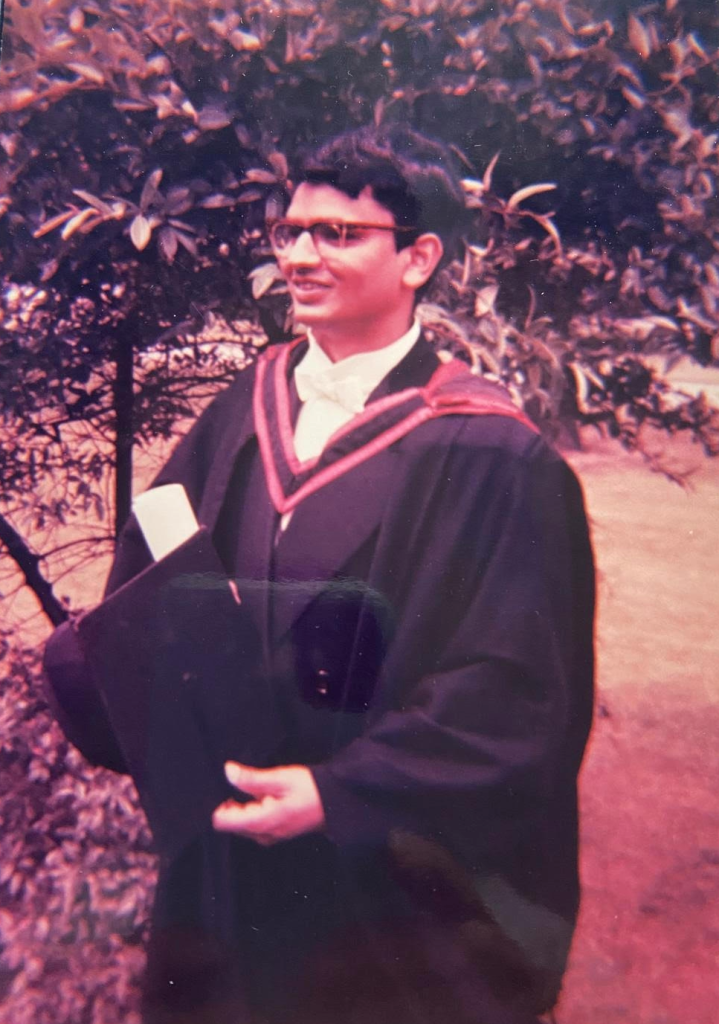
Dr. Deen Sharma returned with his wife and children to Guyana, a newly independent country, as a general surgeon at the Public Hospital Georgetown and joined other notable surgeons such as Dr. Bud Lee and Dr. Imran Ali. After one year, he was transferred to New Amsterdam Hospital, where he was positioned for two years as Resident Surgeon.
In 1972, he was amongst six successful applicants from the Commonwealth for a Smith and Nephew scholarship. Once again, Dr. Sharma uprooted his family and travelled to England, to the Institute of Urology and North Middlesex Hospital, to be trained in a specific procedure: “TransUrethral Resection of the Prostate” (TURP). It was an overnight journey by aircraft this time. One year later, they returned to Guyana, where he introduced this procedure to the Public Hospital Georgetown.
Dr. Sharma was the first and only urological surgeon in Guyana at the time.
The working conditions at the public hospital were rudimentary compared with where and how he had been trained. He had to bring his own instruments, lighting was poor, and suction was inadequate. Staff had to be trained to manage patient care.
It was a difficult operation without those impediments, and at particular times it required him to work quickly to prevent complications. The main source of difficulty being restricted vision due to bleeding. A technique then used in Jamaica of injecting vasopressin during gynaecological surgery was assessed. But would the same technique be effective regarding the prostate? There were no library references. Instead, Dr. Sharma had to use his expertise, consult with specialists overseas, and investigate this independently. He calculated that 10 units of vasopressin diluted with 9.5 ml isotonic saline injected trans-rectally into the prostate immediately before the operation would reduce blood loss. It did by 50%. It improved vision during TURP without specialized equipment.
Furthermore, glycine would have been the preferred choice as an irrigant, but it was expensive for the Public Hospital to afford. So, he proposed the idea that the hospital could prepare sterile water instead. This proved to be a successful option.
Hospitals were not spared the tough economic sanctions imposed on Guyana from the mid-1970s to late 1980s. Lack of equipment, inadequate suction, lack of xenon lighting, and a limited ICU continued to plague their working conditions. Library references were still unavailable. Dr. Sharma continued to consult with his colleagues overseas; the fax machine became his best communication device.
A specialist from the Karolinska Institute in Stockholm, Sweden, generously lent an Alcolmeter to measure the blood alcohol levels (alcohol had been added to the irrigant water before surgery). This surgical procedure proved to be a tremendous benefit in Guyana.
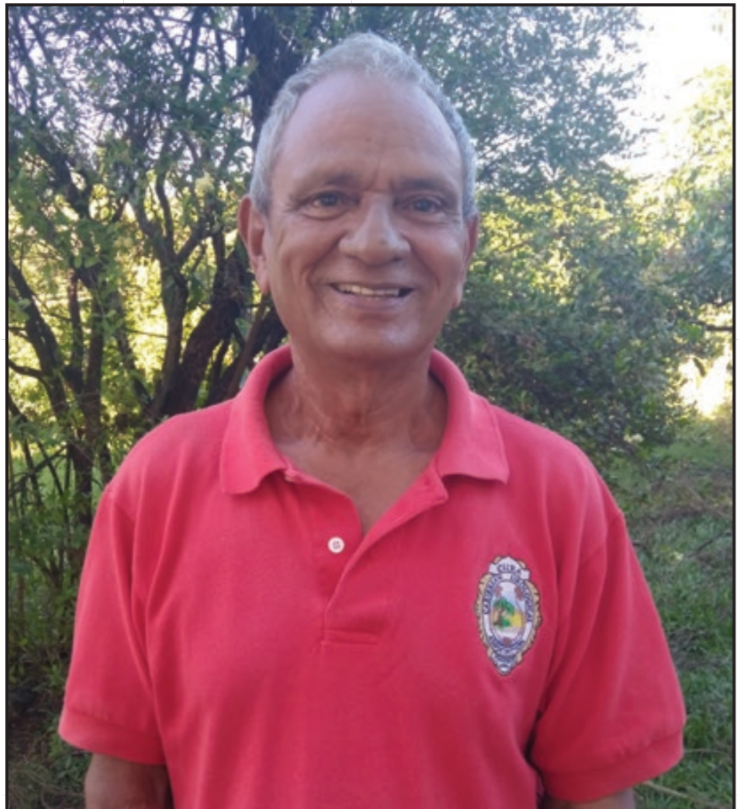
I met with Dr. Sharma, now semi-retired; he still consults, and he is not a man of few words. This 86-year-old can rattle off surgical procedures in the presence of specialists with great effect. He is not to be taken lightly. His contentious spirit was evident at an early age. While at Queens College, he challenged the teaching of English History and said he must be taught Guyanese History or Caribbean History.
I asked him what his days in Dublin were like as a foreign student. “The Irish were fair and welcoming.” He shared living quarters with eight West Indian medical students who all became leaders in their fields and have remained firm friends since. Professor Owen Morgan of Jamaica and Professor Bartholomew of Trinidad were included. They also hosted the first Jamaican Olympic gold medalist, later a surgeon, Dr. Arthur Wint.
Dr. Sharma was the President of the Guyana Medical Association and an elected member of the British Association of Urological Surgeons.
He has made a significant contribution to local urological training in Guyana and has taken some of his procedures to the wider Caribbean. Along with many other local professionals, he contributed towards the formation of the medical school at the University of Guyana, and was appointed Dean of the faculty, and became popularly known as “Dean Deen”!
Dr. Sharma’s children all pursued higher studies in the science field. His son, Dr. Davendra Sharma, after graduation from Trinity College as a urological surgeon, picked up where his father left off and was awarded an OBE by the British Government for his inventive methods for severely injured soldiers returning from the war in Afghanistan.
Dr. Sharma no longer plays tennis but is an avid gardener, enjoys books, music, and visits from his five grandchildren.
What I will remember him most for is the seatbelt law. He was the only parent I observed who used a seatbelt when he drove his children to school. Years later, he approached the Minister of Health, Dr. Leslie Ramsammy, and together they influenced the Home Affairs Minister to enact this into law. As a result, one less car accident patient for him to operate upon.
Deen was a much presidenced man: several terms as President of the Guyana Medical Association, President of the Caribbean College of Surgeons, President and Foundation Member of the Caribbean Urological Association. He represented the Republic of Ireland as Honorary Consul, not President, for 25 years.
Dr. Deen Sharma’s life story reflects a powerful combination of faith, discipline, innovation, and service. From humble beginnings to national and regional leadership in medicine, his contributions continue to shape healthcare in Guyana and beyond, leaving a legacy that will benefit generations to come.