

A fall or loss of balance is a sudden drop from an upright position to the ground without losing consciousness. Sometimes, it can be difficult to distinguish a simple fall from syncope (blacking out) caused by a medical problem. If you are experiencing “blacking out” and losing consciousness, or having chest pain or heart palpitations before falling, it is not a simple fall but a medical problem.
Why Are Falls Dangerous?
Falls are a main cause of injuries and hospital stays for older adults. They often lead to broken bones, pain, and a loss of independence. Sometimes, a fear of moving after a fall makes people less active, which weakens their bodies and increases their risk of falling again.
Hip fractures are a very serious result of falls. They require immediate surgery, cost the healthcare system a lot of money, and frequently cause long-term disability. Sadly, about 1 in 3 older adults die within the first year after breaking a hip.
Why Do Older People Fall?
Older adults face a high risk of falling for several key reasons:
Body Changes: Aging causes muscle loss, weaker strength, and poor balance. Joint problems like arthritis also make it harder to move safely.
Vision Problems: Eye conditions like cataracts, glaucoma, and macular degeneration make it difficult to see hazards.
Medications: Many medications can cause dizziness, which makes people unstable on their feet.
Body Shape: Having a large belly shifts a person’s center of gravity forward, making it much easier to lose balance, especially when turning around.
Most fall injuries happen at home due to everyday slips and trips. The most dangerous areas are bathrooms, kitchens, and stairs. These places often have hazards like wet floors, loose throw rugs, and missing grab bars.
Leg strength is a strong and direct predictor of how long and how well you will live. Strong leg muscles protect your balance and are also associated with slower cognitive decline. Muscle strength drops much faster than actual muscle size. Hospitalized patients can lose up to 5% of their muscle mass and 15% of their muscle strength each week due to bed rest and physical inactivity; hence, early mobilization is needed to prevent further decline.
Assess Your Risk
Use tools like the National Council on Aging Falls Free Checkup questionnaire: https://www.ncoa.org/tools/falls-free-checkup/
Here are a few simple tests you can do at home or at your doctor’s office to assess your fall risk. You can find videos of these tests on YouTube, and online questionnaires to assess fall risk are also available.
Chair Test
You can test your leg power with a simple chair test:
- Sit in a standard chair.
- Stand up and sit down five times in a row without using your hands.
- If it takes you more than 15 seconds, it is a warning sign of low leg strength and higher health risks.
Timed Up and Go (TUG) Test
The Timed Up and Go (TUG) test is a physical test used to check a person’s mobility, balance, and risk of falling. You need a standard armchair, a stopwatch, and a line or marker on the floor placed 3 meters (10 feet) away.
Start sitting back in the chair with your feet flat on the floor. You can use your regular shoes and any walking aid you normally need, such as a cane.
When the tester says “Go”:
- Stand up from the chair.
- Walk at your normal, safe pace to the 3-meter line.
- Turn around at the line.
- Walk back to the chair at your normal pace.
- Sit back down completely in the chair.
A time of under 10 to 12 seconds is generally considered normal for healthy older adults, showing good mobility and a low risk of falls; 12 to 13.5 seconds or more often indicates a higher risk of falls.
One-Foot Balance Test
The one-foot balance test, also called the single-leg stance test, measures stability by timing how long you can stand on one leg.
Here is how to do it safely:
- Stay near safety: Stand next to a wall, counter, or sturdy chair so you can grab it if you start to fall.
- Get in position: Stand up straight. Put your hands on your hips or let your arms hang at your sides.
- Lift your foot: Lift one foot slightly off the floor. Do not let it touch your other leg.
- Time yourself: Start a timer. Stop the clock if your foot touches the floor, your hands move off your hips, or your standing foot moves.
Test both legs. Balance on your non-dominant leg (the leg you don’t kick with) usually worsens faster as you get older.
What the results mean:
- Under 10 seconds: You have a higher risk of falling.
- Under 5 seconds: You have a very high risk of falling.
How Can You Reduce Your Risk of Falling?
You can significantly reduce the risk of falling by modifying your living environment, staying physically active, and managing personal health factors.
A history of a previous fall is the single strongest predictor of future falls, and the fear of falling is the second strongest independent predictor.
Make Your Home Safe
Clear pathways: Remove extension cords, portable fan wiring, and small furniture from the hallway, and remove rugs. Trip-and-fall accidents from toys and shoes in the hallway are a major cause of preventable falls.
Improve lighting: Decreased visual acuity is part of aging; get regular eye exams to ensure you have the right corrective glasses and cataract correction. Use bright bulbs and place nightlights in bedrooms, hallways, and bathrooms to illuminate the hallway. Turn on lights and use handrails before using stairs.
Safety aids: Install grab bars next to the toilet and inside the tub or shower, and use non-slip mats on slippery surfaces. Raised toilet seats and shower chairs also help with safety and fall prevention. A cane or walker may also help with balance during everyday walking.
Keep items accessible: Store everyday necessities within easy reach to avoid using step stools or climbing.
Build Strength, Balance, and Endurance
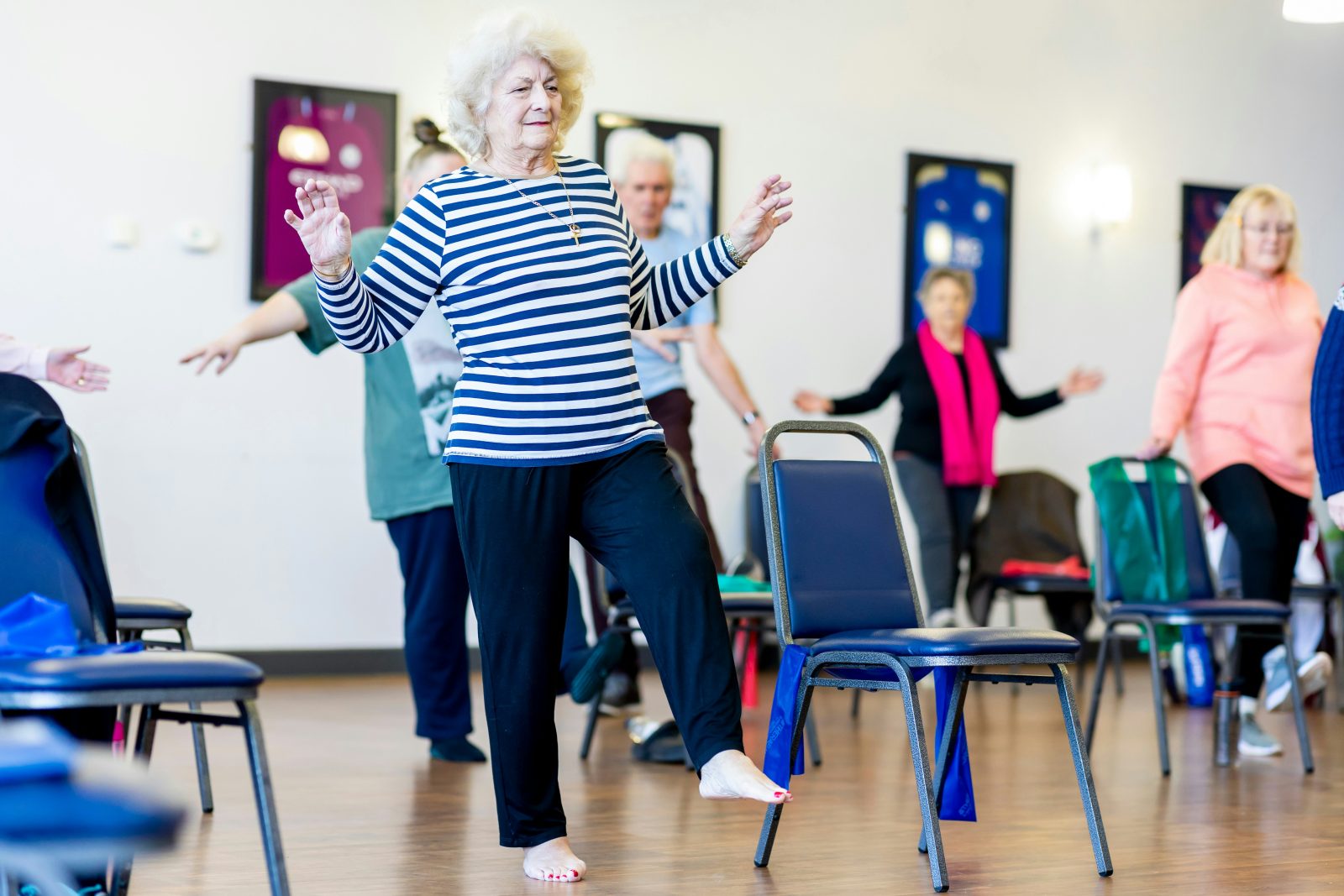
Exercise regularly: Before starting an exercise program, get clearance from your physician, as many older adults have other health problems and are using high-risk medications. Modify any exercise program to fit your living, environmental, and health situation. Activities like walking, water workouts/swimming, yoga, or Tai Chi can improve balance and lower-body strength.
Move cautiously: Stand up slowly from a sitting or lying position to prevent dizziness from sudden drops in blood pressure.
Wear proper footwear: Avoid walking in socks on slippery flooring; don’t wear slick slippers. Instead, choose sturdy, flat shoes with non-skid rubber soles.
Review Health and Medications
Check medications: Ask your doctor to review your medications, as taking four or more medications or certain sedatives can cause dizziness and drowsiness.
The BEERS Criteria are readily available online and can be reviewed. It is an expert-vetted list of potentially inappropriate medications that older adults (typically age 65 and older) should use with caution or avoid entirely because the risks often outweigh the benefits.
Using Caribbean Resources to Help Prevent Falls
The Caribbean has a fast-growing older population, but it lacks enough community centers, gyms, therapy pools, or therapists to evaluate and help seniors prevent falls. Using our natural resources as a solution, communities can use simple modalities to improve fall risk:
Beach Exercises: Water workouts at the beach are great for people with arthritis. The water removes pressure from your joints, reduces pain, and helps you move better.
Walking: Walking is one of the best exercises to improve leg strength and balance. Walking up hills or staircases is an excellent way to strengthen your legs and improve your heart health.
Walking barefoot without shoes on grass or the beach strengthens your feet and helps your brain feel the ground better. This greatly improves balance and helps prevent falls.
Important safety warning: Do not walk on hot sand, concrete, or asphalt, as these can burn your feet. You should also avoid walking barefoot if you have diabetes with nerve damage or open sores.
Dancing: An important form of social expression and celebration in the Caribbean, improves physical health by engaging multiple muscle groups simultaneously to improve coordination, balance, stability, and lower-body strength in older adults, helping to maintain posture and prevent falls. Waist whining engages your deep abdominal muscles, improves core stability, strengthens the lower back and pelvic floor muscles. Dancing is also good for your mental health, it improves cognitive function, prevents loneliness, and improves mood.
Diet: Inadequate protein intake leads to muscle wasting; adequate protein intake helps preserve muscle mass. Vegetarians can increase their intake of lentils, beans, and peas for a non-animal protein source; these foods are also an excellent source of calcium and fiber. Take a combined calcium and vitamin D supplement when you are deficient in vitamin D to help strengthen your bones.
Bottom Houses: This traditional space is a place to gather and socialize. It can also serve as a safe space to exercise, especially when friends or family are around to help you stay steady.
Chair Exercises: You can do free, easy movements at home using a chair for support. For example, doing heel and calf raises while watching TV improves ankle strength and blood flow. Wall squats or chair squats build strong legs.
Gardening and Deep Squats: Stooping down to garden builds great lower-body strength. Seniors who garden tend to have better balance, walk faster, and fall less often than those who don’t.
Learn More About Fall Prevention
To learn more about staying safe, you can look up free resources like The Harvard Fall Prevention Guide: https://www.health.harvard.edu/healthy-aging-and-longevity/fall-prevention-strategies-to-help-keep-you-from-falling-down
This is a brief overview of falls, how to assess fall risk, and some advice to prevent accidental falls at home. Please see your doctor for advice on which exercises are recommended for you based on your medical history.