


Breast cancer is no longer a disease that we can discuss only during the month of October. In Guyana, it is an important and growing public-health concern that affects women, families and communities across the country.
According to the International Agency for Research on Cancer’s GLOBOCAN 2022 estimates, breast cancer was the most commonly diagnosed cancer among women in Guyana, with an estimated 229 new cases in 2022. It was also the leading cancer among Guyanese women in terms of new cases and one of the country’s major causes of cancer mortality.
Behind every statistic, however, is a person—a mother, daughter, sister, wife, colleague or friend.
The challenge before us is therefore not simply to increase awareness of breast cancer, but to ensure that awareness translates into early presentation, accurate diagnosis, timely treatment and long-term support.
Early Detection Can Change the Story
Breast cancer develops when abnormal breast cells grow uncontrollably and can eventually spread to other parts of the body. The stage at which the cancer is diagnosed is an important factor in determining treatment options and outcomes.
This makes early detection particularly important.
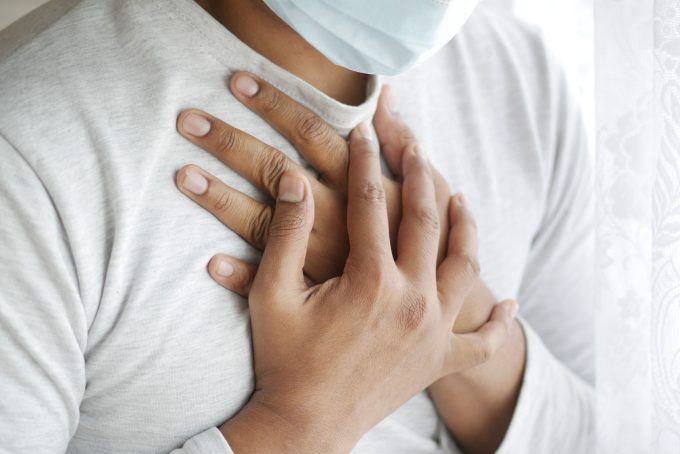
A woman should seek medical assessment if she notices a new or persistent breast lump, a change in the size or shape of the breast, skin dimpling or thickening, nipple inversion, unusual nipple discharge, or another change that is not normal for her.
Importantly, not every breast lump is cancer. Many breast conditions are benign. But the only safe approach to a new or concerning abnormality is appropriate clinical evaluation.
Fear should never be the reason a woman delays seeking help.
Expanding Access to Screening in Guyana
Guyana is expanding access to screening within the country’s healthcare system.
Historically, mammography in the public healthcare system was concentrated at the Georgetown Public Hospital Corporation. The Ministry of Health has been expanding access to mammography outside Georgetown, with machines now operational at facilities including Public Hospital Suddie, Linden Hospital Complex, New Amsterdam Hospital and Lethem Regional Hospital.
This expansion is particularly important for women living outside Region Four. Access to healthcare should not be determined by one’s ability to travel to Georgetown.
The development of regional diagnostic services is therefore an important step toward a more equitable cancer-care system.
But a mammogram is only one component of the journey.
From an Abnormal Mammogram to a Diagnosis
From an abnormal mammogram to a diagnosis is a time-sensitive process.
Finding an abnormality is the beginning—not the end—of the diagnostic process.
Depending on the clinical findings, further assessment may include breast ultrasound, biopsy and pathological examination of tissue.
This is where the development of diagnostic and pathology capacity becomes particularly important, with timely turnaround time for biopsy results availability. For the patient, this matters enormously.
The period between discovering a breast lump and receiving a diagnosis can be filled with anxiety and uncertainty. A system capable of moving patients efficiently from suspicion → imaging → biopsy → pathology → treatment can reduce unnecessary delays and allow appropriate care to begin sooner.
Personalized Treatment and Modern Breast Surgery
Breast cancer treatment is increasingly personalized, with current advancements enabling treatments based on the specific type of breast cancer. So once breast cancer has been diagnosed, treatment is not necessarily the same for every patient.
Modern breast cancer care considers the type of tumor, its stage and its biological characteristics. Depending on these factors, treatment may involve surgery, chemotherapy, radiotherapy, hormone therapy, targeted therapy, immunotherapy or combinations of these approaches.
Surgery remains an important component of treatment for many patients. However, modern breast surgery is about much more than simply removing a breast.
Where appropriate, breast-conserving surgery may be an option. For other patients, mastectomy may be necessary. The decision must be individualized according to the tumor, the patient and the available treatment pathway.
The objective should always be to provide oncologically sound treatment while preserving quality of life whenever possible.
The Importance of a Multidisciplinary Approach
The importance of a multidisciplinary approach is fundamental in obtaining the best outcomes.
Breast cancer care cannot be delivered effectively by one doctor working in isolation.
The ideal pathway brings together primary-care physicians, surgeons, radiologists, pathologists, medical oncologists, radiation oncologists, nurses and other healthcare professionals.
The patient should remain at the centre of this team. For Guyana, strengthening multidisciplinary cancer care will be an important part of the next phase of healthcare development. As diagnostic and treatment capacity expands, so too must coordination between services.
Beyond October: Changing the Culture
Breast cancer awareness campaigns have played an important role in encouraging women to seek screening and medical attention. However, awareness should not disappear when the pink ribbons come down.
We need a culture in which women feel comfortable discussing breast health throughout the year.
We also need to recognize that breast cancer is not exclusively a woman’s disease. Although uncommon, men can develop breast cancer. A persistent breast lump or other concerning breast change in a man should also be evaluated.
Family history is another important consideration. Individuals with a strong family history of breast or ovarian cancer, particularly cancers occurring at younger ages, should discuss their personal risk with a healthcare professional.
Building the Future of Breast Cancer Care in Guyana
Building the future of breast cancer care in Guyana is an important point in the development of its cancer-care system.
Expanding mammography services across the regions is a major step. Strengthening pathology, imaging, surgical services, oncology, radiotherapy, palliative care and cancer data collection will be equally important.
We also need to understand our own disease patterns.
How many Guyanese women are diagnosed each year? At what stage are they presenting? What types of breast cancer are most common? How many undergo surgery? How many receive systemic therapy or radiotherapy? What are the survival outcomes?
Reliable national data can help answer these questions and guide future investment.
A Message to Guyanese Women
Breast cancer does not have to define the outcome of a patient’s life.
The message is simple:
Know your breasts. Know your risk. Pay attention to changes. Seek medical attention early. Participate in appropriate screening.
Do not ignore a lump because it does not hurt. Do not assume that a change will disappear on its own. And do not allow fear of cancer to prevent you from being evaluated.
Early detection is not simply a slogan. It is the first step in a pathway that can lead from awareness to diagnosis, diagnosis to treatment, and treatment to survivorship.
As Guyana continues to invest in modern healthcare, our goal should be clear: not merely to diagnose breast cancer, but to diagnose it earlier, treat it appropriately and support every patient throughout her journey.
The fight against breast cancer in Guyana will not be won in October alone.
It will be won in our clinics, hospitals, communities and homes—one early diagnosis at a time.