

Public engagement around weight loss has intensified, driven by heightened awareness of disease prevention, the influence of social media, and an evolving pharmaceutical landscape. Ozempic’s transition from a diabetes therapy to a widely discussed weight-loss intervention has created tension among stakeholders, with polarizing viewpoints. With over a decade of specialization in Internal Medicine, I have observed a rising prevalence of obesity interacting with hypertension, diabetes, dyslipidaemia, fatty liver disease, and metabolic dysfunction—conditions that continue to burden families throughout Guyana.
A growing population further amplifies the urgency for action. Guyana’s population increased by 8.7%, from 764,832 in the early 2000s to 831,087 as of last year (PAHO, 2024), with a higher ratio of women to men (105:100). Concurrent trends include increased tobacco use, obesity, and cardiovascular disease (CVD), alongside declining physical activity and a dependency ratio of 56 passive individuals per 100 active persons (PAHO, 2024). The American Diabetes Association (ADA, 2025) defines obesity as a “chronic, relapsing disease with metabolic, physical, and psychosocial complications.” Importantly, obesity significantly increases the risk of Type 2 diabetes mellitus (T2DM).
The demand for safe, standardized weight-management approaches is unequivocal. Current strategies include combined behavioural and lifestyle counselling, pharmacotherapy, and metabolic surgery, with adherence to treatment being imperative. Ozempic is validated for the treatment of T2DM; which will be addressed here before its weight-management use.
Weight management framed as a physiological issue with more than 890 million people (WHO, 2024) living with obesity – is through narrow lenses. The discussion must dilate the view to fully understand how societal pressures and digital environments have begun to create an even deeper issue – the mental health issue affecting men and women.
In Guyana, conversations across social media platforms underscore how weight has become a determinant of social acceptance and self-perception rather than solely a health parameter. Understanding this context is essential. Safe, evidence-based strategies must be used to support long-term well-being without relapse.
A Brief History of Ozempic
Ozempic (semaglutide), approved in 2017, belongs to the glucagon-like peptide-1 receptor agonist (GLP-1 RA) class of medications and is indicated to improve glycaemic control in individuals with T2DM. It mimics a hormone that regulates blood sugar, slows gastric emptying, and reduces appetite, with weight reduction emerging as a secondary effect. Clinical trial outcomes led to expanded use and the later approval of higher-dose semaglutide (Wegovy) for weight management between 2022 and 2023.
This transition reshaped public perception, shifting Ozempic from a diabetes therapy to what is often viewed as a lifestyle medication. Safeguards and public education did not evolve at the same pace, leading to misunderstandings regarding appropriate use and reinforcing the need for clear public-health guidance.
Ozempic as a Diabetes Therapy
Ozempic is validated and safe when prescribed under medical supervision for T2DM. Its benefits include:
- Reduction in HbA1c levels
- Lowered cardiovascular disease risk in T2DM populations
- Promotion of weight loss
- Support for long-term glycaemic control when combined with behavioural therapy, diet, and exercise
Ozempic is not a standalone therapy; it is one component of a structured diabetes-management plan that includes nutrition, physical activity, glucose monitoring, and additional medications as required.
Harmful Side Effects
When used incorrectly or by individuals without diabetes, Ozempic carries significant risks, including:
- Worsening diabetic retinopathy, potentially leading to partial or permanent vision loss
- Acute kidney injury or kidney failure, often precipitated by dehydration from severe nausea, vomiting, or poor oral intake
- Pancreatitis and gallbladder disease
- Severe gastrointestinal intolerance leading to malnutrition and sarcopenia (loss of muscle mass)
- Rebound weight gain upon discontinuation
- Polypharmacy when combined with unregulated “rapid detox” supplements
Sarcopenia warrants particular attention. Weight loss in non-obese individuals with low muscle reserves disproportionately reduces lean muscle mass, compromising mobility, strength, and long-term metabolic health. This risk is heightened when cosmetic weight-loss shortcuts are pursued.
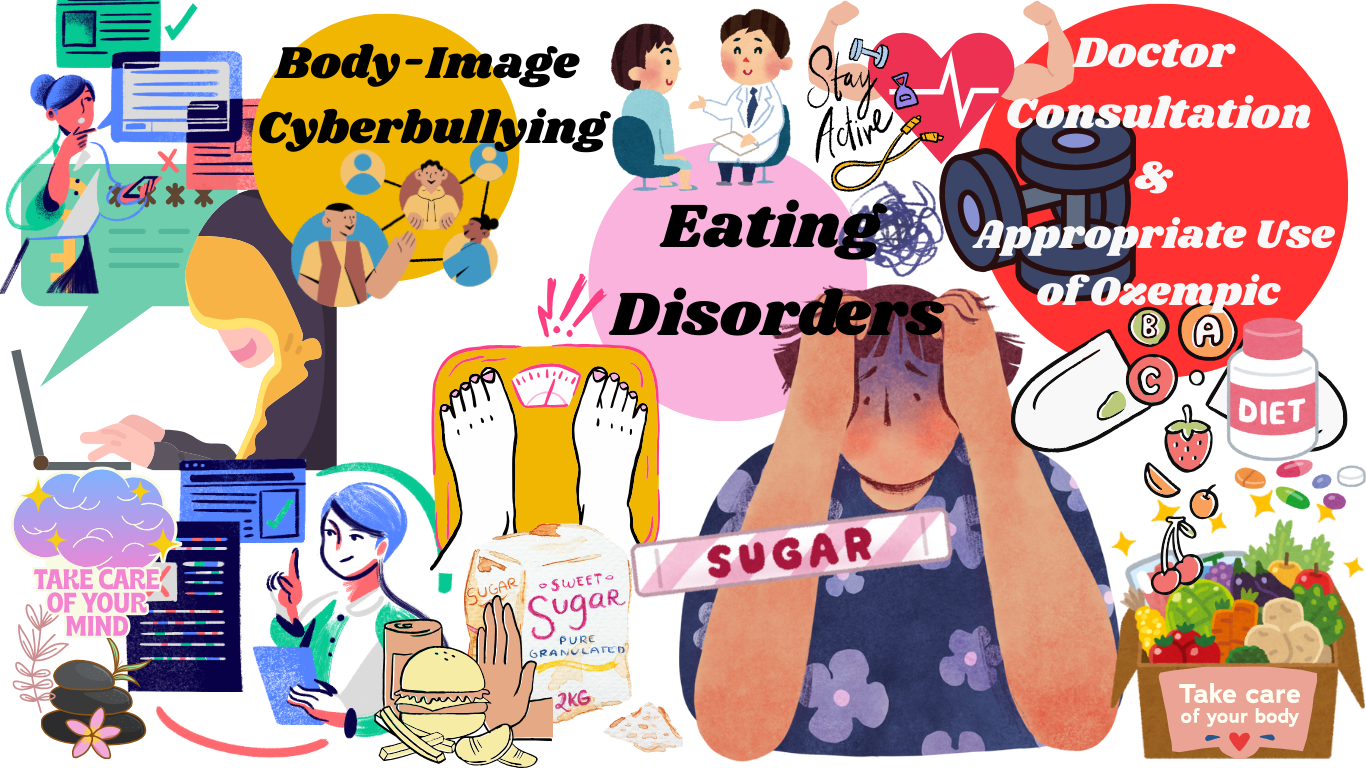
Emerging Driver of Psychological Harm: Body-Image–Related Cyberbullying
Alongside pharmaceutical shifts, there has been a parallel rise in body-image–related cyberbullying (BRC). Appearance-based commentary affects individuals across demographics, contributing to body dissatisfaction and declining self-esteem. Research by Rodgers RF (2023) links BRC to anxiety, depressive symptoms, and disordered eating.
Co-morbidities such as polycystic ovary syndrome (PCOS), hypothyroidism, diabetes, and metabolic syndrome further complicate weight control, often necessitating medication, dietary support, and structured physical activity. When cyberbullying adds emotional stress, individuals may turn to unsafe coping mechanisms, including extreme dieting, unregulated supplements, or rapid-weight-loss products.
Mental Health and the Ripple Effect of Ozempic Misuse
Low self-esteem, anxiety, depression, and trauma associated with appearance-based judgment create conditions that foster misuse of weight-loss medications. Internalized societal expectations promote rapid transformation, leading some individuals to adopt Ozempic without medical evaluation or to combine it with unregulated supplements.
Misuse frequently results in:
- Irregular dosing
- Rapid weight loss or muscle loss
- Medical complications
- Rebound weight gain
- Worsening mental well-being
Ozempic: Diabetic vs. Non-Diabetic Patients
The distinction between diabetic and non-diabetic populations is critical.
Diabetic Patients
- Achieve improved glycaemic control
- Experience weight loss as a therapeutic benefit
- Undergo regular medical monitoring
- Have metabolic dysfunction that benefits from GLP-1 therapy
Non-Diabetic Patients
- Do not share the same metabolic profile
- Face increased risk of gastrointestinal intolerance
- Are susceptible to sarcopenia and malnutrition
- Often pursue weight loss for aesthetic reasons
- May use the drug without appropriate medical oversight
Ozempic as Secondary Weight-Loss Therapy
In individuals with obesity and related comorbidities, semaglutide can be effective when used as part of a comprehensive plan involving nutrition, exercise, and behavioural therapy. Clinical trials demonstrate meaningful weight reduction when therapy is appropriately monitored.
Individuals with obesity are also at increased risk of weight-related arthritis, low back pain, and obstructive sleep apnea, all of which may improve with modest weight loss. A reduction of 5–10% of initial body weight has been shown to yield significant benefits. Guidelines recommend achieving this target within six months of intervention (Kim et al., 2023). Anti-obesity medications may be initiated when BMI is ≥30 kg/m², or ≥25 kg/m² with comorbidities, following unsuccessful lifestyle interventions (Garvey et al., 2016; Kim et al., 2023).
The Local Conversation: Why Guyana Needs Balanced Information
In Guyana, chronic diseases remain a leading cause of morbidity. As patients explore weight-loss therapies, body-image–related cyberbullying and underlying mental-health challenges contribute to desperation for rapid results. This environment makes individuals vulnerable to misinformation regarding eligibility, dosing, risks, and follow-up.
Guyanese patients need balanced, evidence-based, community-focused guidance—an approach that recognizes the value of medication while reinforcing sustainable lifestyle habits. A national conversation must therefore include:
- Mental-health protection
- Digital responsibility
- Medical accuracy
- Compassionate support
A Balanced Approach to Weight Management
Weight-loss medications are tools, not substitutes for healthy living. Optimal outcomes occur when:
- Lifestyle changes accompany medication use
- Treatment is monitored by a licensed practitioner
- Decisions are individualized
Patients may consider weight-loss therapy if they have:
- A BMI ≥30, or
- A BMI ≥27 with associated conditions
A healthy weight-management framework should:
- Address body-image concerns by reducing shame, supporting self-worth, and recognizing psychological harm
- Confront body-image–related cyberbullying through education, safer digital spaces, and discouragement of appearance-based targeting
- Prevent quick fixes by promoting supervised medication use and long-term lifestyle habits
Together, these pillars pursue health—not perfection—while preserving dignity and safety. Ultimately, effective weight management enhances quality of life without reinforcing harmful body-image standards.