

Uterine fibroids is a very common condition affecting many women in the Caribbean. One study in JAMAICA suggested up to 80% of our population have uterine fibroids and even more startling is up to one half of these are not aware they have the condition.
It is more common in women of Afro-Caribbean ancestry and more commonly affects women in their fourth or fifth decade of life. It is more likely to occur in women who have never had children and occurs more commonly if the woman has family members also affected.
Fibroids arise from the smooth muscle of the uterus and tends to grow during the reproductive years, shrinking in size after menopause is attained. It is benign (non-cancerous) but can undergo malignant change particularly after menopause. As such a postmenopausal woman should seek urgent attention if she notices her fibroids getting larger after having stopped seeing periods.
Symptoms
The symptoms a woman may have largely depends on the size and location of these tumors.
Menstrual Symptoms
For women with fibroids in the cavity of the uterus or in the muscular wall of the uterus the symptoms are the classically associated issues of heavy, prolonged and painful periods. The woman may notice increased duration of her period, associated with the passage of clots and increased soiling and flooding of her sanitary napkins.
The heavier her blood loss, the more likely symptoms of anemia will be experienced. These include weakness and fatigue, palpitations (racing of the heart) and shortness of breath. Anemia causes an increased workload on the heart to deliver oxygen to crucial organs and as such there is increased risk of complications to the heart, kidneys or the brain.
Fertility Concerns
Particularly for women with fibroids in the cavity, difficulty in conceiving a pregnancy or increased miscarriages or preterm labour may result.
Pressure and Compression Symptoms
Some women however do not experience the classic symptoms mentioned but may instead have symptoms that may not be easily recognized as being caused by uterine fibroids.
Changes in urinary frequency, urgency or nocturia (getting up 2 or more times at night) may result from fibroids particularly on the surface of the uterus compressing on the urinary bladder. Likewise, constipation may result if the fibroids compress on the bowel affecting the passage of stool. Other non-specific symptoms include backpain, pelvic pressure, painful intercourse or pain radiating down the legs may result.
No Symptoms
As previously mentioned up to half of our patients may experience no symptoms at all and may not even recognize they have uterine fibroids. This does not however mean they are free from harm. Fibroids silently compressing the urinary bladder or ureters may obstruct the free flow of urine, thereby putting a strain on the kidneys, which in turn can cause renal impairment or failure if remains untreated.
What Then Is the Recourse for Women Without Symptoms?
It remains essential that all women should see their Gynaecologist at least annually even in the absence of symptoms. This well woman visit can easily and conveniently be scheduled at the time of her annual Pap smear.
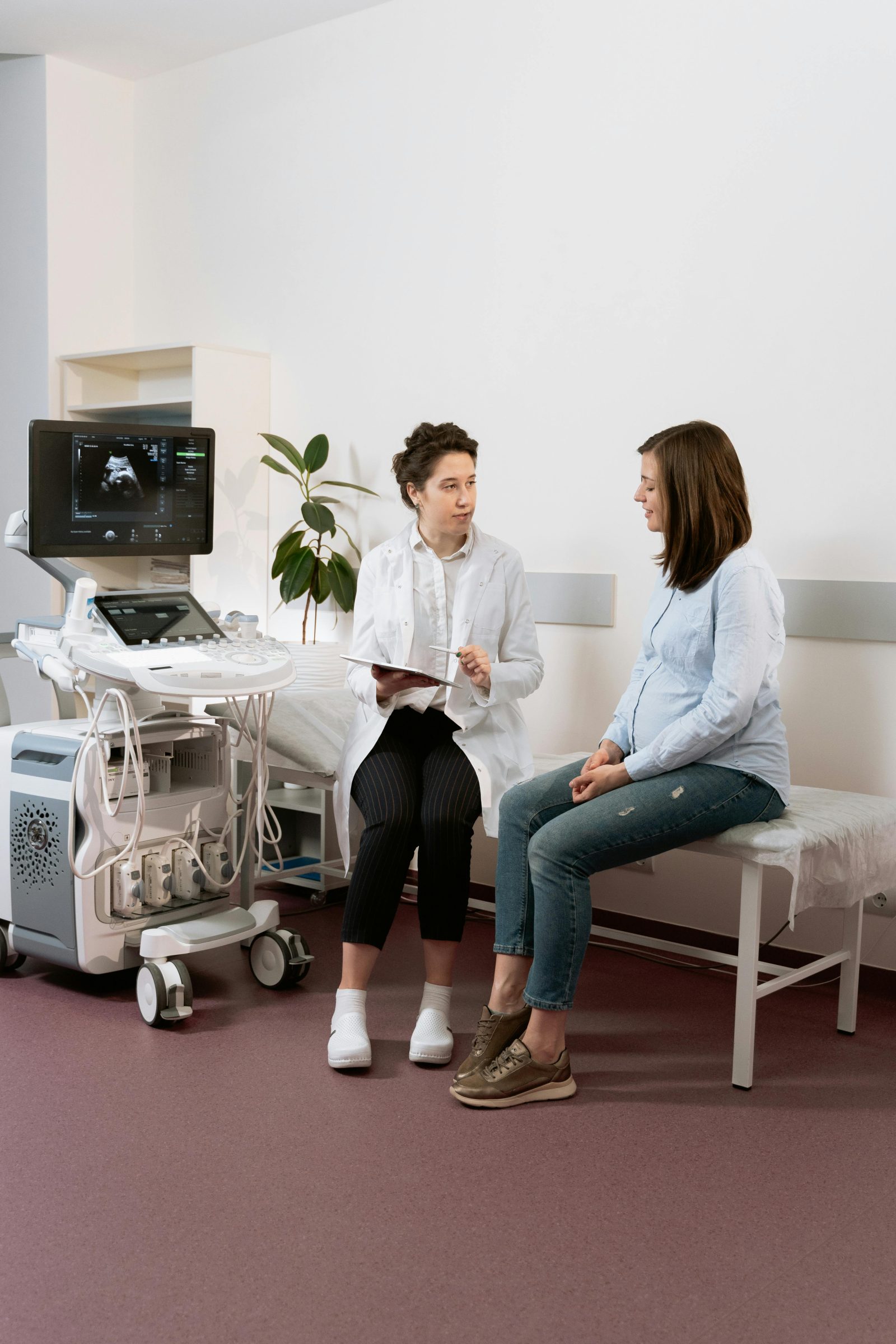
At this visit your gynaecologist will take a careful medical history as well as perform a pelvic examination which may arouse suspicion of a diagnosis of uterine fibroids. An imaging modality, most likely an ultrasound will then be performed to confirm the diagnosis.
Once a diagnosis is made then your Gynaecologist will work out a plan to manage your unique situation.
Management Options
Expectant Management
This may in asymptomatic women, take the form of expectant management, monitoring symptoms and observing for any change in features which may require further treatment.
Medical Management
For symptomatic women medical management with pharmaceuticals may be appropriate. Medications maybe used to reduce or stop bleeding, manage pain or treat anemia.
There are many medications that can be used and these include:
- Combined oral contraceptives
- Progestin drugs — oral, intramuscular, subdermal or intrauterine preparations
- Gonadotropin agonists or antagonists
- Iron preparation
- Non-steroidal anti-inflammatory drugs
- Androgen analogues
- Anti fibrinolytics
It is beyond the scope of this article to discuss all these options in detail, but certainly a discussion can be had with your gynaecologist as to the most appropriate choice based on your symptoms, risk factors and clinical history.
Surgical Management
Finally, the most definitive management may involve doing a surgical procedure as this may be completely curative.
The most common gynaecological surgery performed today remains a hysterectomy or complete removal of the uterus. This of course is curative as there is no chance of fibroids returning. There are many ways this surgery can be done such as an open surgery (laparotomy), vaginally, laparoscopically, laparoscopic assisted vaginally or robotic. At the time of doing a hysterectomy the woman may also decide to remove her fallopian tubes and ovaries particularly if she has a strong genetic risk for future malignancy.
If future fertility is desired or the woman wishes to conserve her uterus, then the fibroids maybe be removed alone while retaining the uterus. This is a more complex operation (Myomectomy) which can result in more blood loss, loss of the uterus and even recurrence of fibroids in the future. Like a hysterectomy it can be performed in a variety of ways similar to the ones mentioned above.
There are less popular options procedurally that can be offered such as uterine artery embolization, but it comes with some disadvantages such as early menopause or increased pelvic pain due to fibroid degeneration.
Endometrial ablation can sometimes be offered and this involves destroying the lining of the uterus. This would only be useful in patients where excessive bleeding is the primary symptom and, in this instance, endometrial pathology such as endometrial cancer would have to be ruled out first.
Conclusion
So, in closing the important bit of advice would be to pay attention to your symptoms, however innocuous you may think them to be, see your gynaecologist regularly, maintain a healthy lifestyle and get the right plan for you, should you be diagnosed with this common condition.