

Sixty years ago, the tiniest human being at birth barely had a chance of survival, and far less chance of growing into an adult. Today, advances in neonatal medicine have transformed those odds. Improvements in ventilator technology, specialized feeding practices, innovative medical techniques, and the emergence of neonatology as a subspecialty of pediatrics have dramatically improved outcomes for premature infants.
One of the physicians who has witnessed—and contributed to—this evolution is Dr. Kushal Raghubir, a consultant pediatrician and neonatologist with more than 25 years of experience.
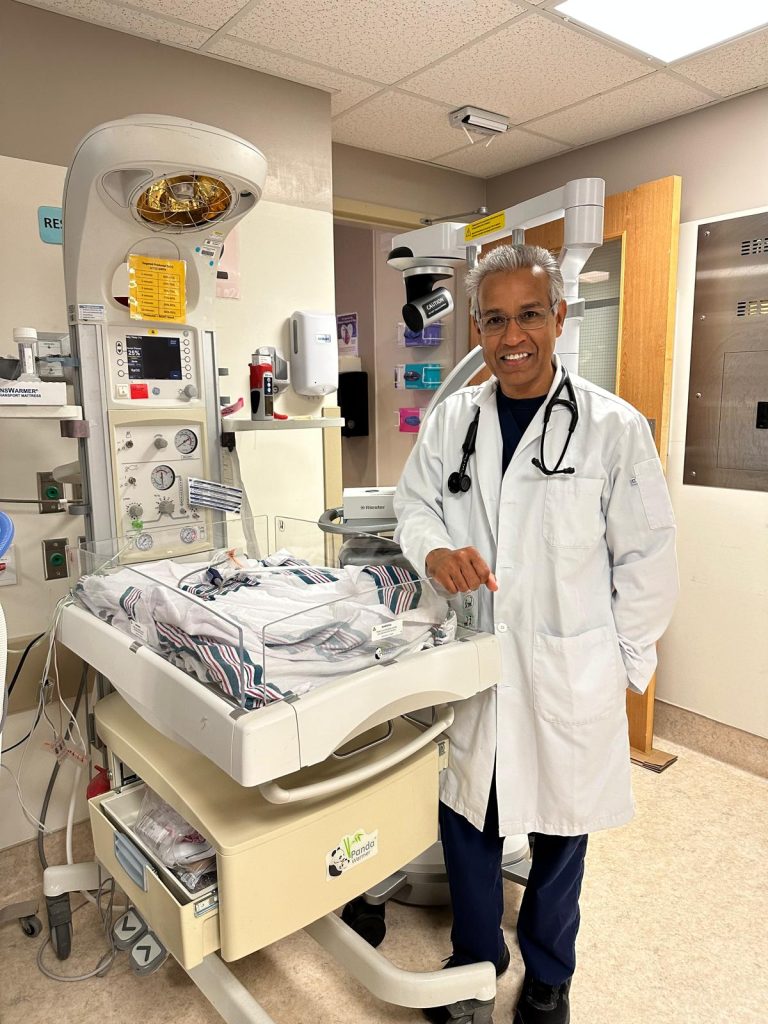
Dr. Raghubir earned his MBBS from the University of the West Indies (UWI), Jamaica, before specializing in pediatrics at Wayne State University at the Children’s Hospital of Michigan. During this period, neonatal care was advancing rapidly, sparking his interest in the specialty. He furthered his studies for another four years in neonatology at the University of Toronto.
While completing his fellowship at Toronto’s Hospital for Sick Children, Dr. Raghubir was among the early physicians trained in the use of the Peripherally Inserted Central Catheter (PICC), a technique that was then being introduced.
The PICC is a flexible, plastic tube, approximately the size of dental floss, inserted through a baby’s peripheral vein in the hand or leg and leading close to the heart to provide long-term intravenous access, with appropriate pain and discomfort control, replacing the need for repeated IV needle insertions. The PICC line allows for parenteral nutrition to be given while the baby is still too fragile to absorb milk feeds. By using such lines, the risk of infections from multiple needle pokes for IV lines decreased significantly.
According to Dr. Raghubir, most babies are born healthy and full term. However, a small percentage are born prematurely, sometimes weighing as little as one pound and measuring only 13 inches in length at approximately 25 weeks’ gestation. As a result, their organs did not have a chance to develop fully , and they often require specialized equipment in order to live.
One of the greatest challenges for extremely premature babies is lung immaturity. Without fully developed lungs, the baby is unable to breathe independently and requires the assistance of a mechanical ventilator. Ventilator technology has existed since the 1920s, but the introduction of neonatal ventilators in the 1960s, together with Continuous Positive Airway Pressure (CPAP), revolutionized care. CPAP supports a baby’s own breathing while helping keep the lungs inflated, significantly improving survival. Thus, the birth of Neonatology, and the creation of the Neonatal Intensive Care Unit (NICU).
Listening to Dr. Raghubir describe these developments highlights the importance of continuous medical research and scientific innovation. It leads to advancements which not just enhances and prolongs life but introduces life to humans who biologically were not ready to be born. The combination of technology and medication, such as the use of a steroid medication given to an expectant mom at risk of premature delivery, reached an inflection point, which reduced many of the complications once associated with premature birth, such as Respiratory Distress Syndrome and Chronic Lung Disease (CLD). The development and use of surfactant instilled directly into the lungs to help with initial ventilation of premature and at risk infants allowed for much less aggressive ventilation techniques and decreased the risk of developing CLD
Premature babies are also vulnerable to infections and other serious complications. One common condition is Necrotizing Enterocolitis (NEC), a severe intestinal infection that can affect premature babies. Treatment often includes medications administered through a PICC line. The use of expressed breast milk is always the best option to help reduce the chance of NEC. The development of expressed milk banks and the use of pasteurized donor breast milk, play a major role in the initial feeds for premature infants.
Nutrition for premature babies is carefully managed. Initially, many receive nutrients intravenously through the PICC line while their digestive systems mature. Sophisticated monitors continuously track heart rate, breathing, oxygen levels, and other vital signs. Blood tests are done on a regular basis to ensure the correct fluids, amino acids and fats are being delivered appropriately. Every aspect of care is carefully measured and monitored around the clock by a team of medical personnel, allowing these babies to gradually progress toward discharge—a process that may take several weeks or even months.
Ideally, that team includes neonatologists, respiratory specialists, pediatric pharmacists, dietitians, social workers, and child life specialists. Even with this level of expertise, their outcomes still depend on the prenatal maladies of the baby, the scope of the illness and the level of care available because neonatology developed differently, in different parts of the world.
Although premature birth accounts for many NICU admissions, not all babies admitted are premature. Full-term newborns may also require intensive care because of severe illness. Other conditions requiring specialized neonatal care include neurological disorders, congenital cardiac anomalies, chromosomal abnormalities, sepsis acquired during or shortly after full term, natural birth, congenital infections acquired from the mother, and traumatic injuries sustained anytime during their early life.
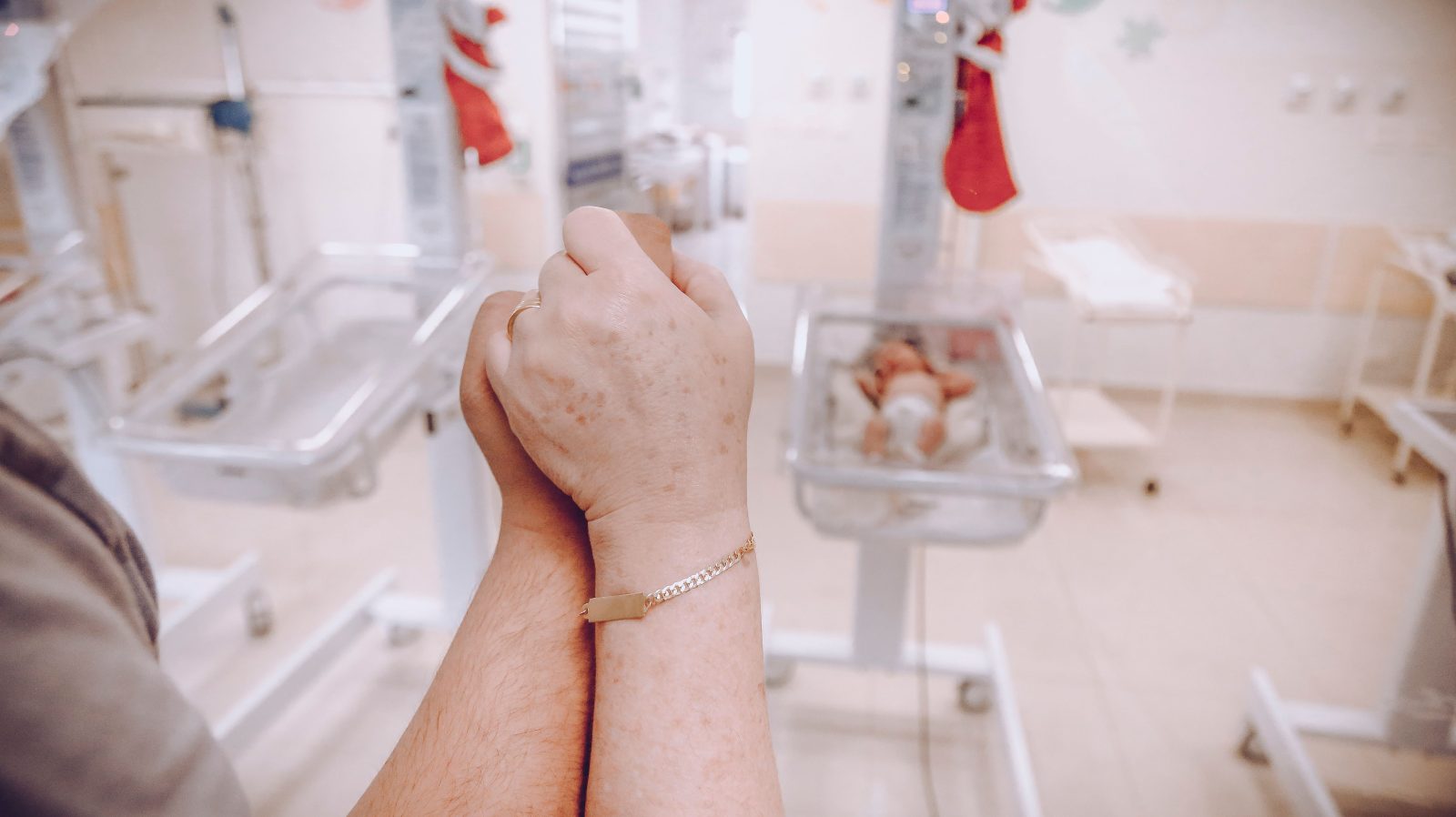
A visit to the Neonatal Intensive Care Unit at Georgetown Public Hospital Corporation leaves a lasting impression. The spacious, well-lit unit, equipped with its own X-ray machine and located adjacent to two operating theatres, was operating at full capacity during our visit. Eighteen babies lay swaddled beneath warm blankets, warmth being imperative to their progress.
As Dr. Raghubir explains, newborns can develop infections or become critically ill shortly after birth. Their immature immune systems make them particularly susceptible to infection, which is why limiting visitors who are unwell is especially important.
The rhythmic sounds of monitors, infusion pumps, and ventilators create an atmosphere of quiet urgency, while meticulous attention to infection prevention is evident throughout the unit. Witnessing life at its most fragile is an emotional experience, but it is quickly soothed by the calm professionalism and compassion demonstrated by the healthcare team.
The NICU at Georgetown Public Hospital was established approximately 12 years ago and has since been upgraded to a Level III unit, just one level below the highest internationally recognized Level IV designation. This milestone was achieved through a collaborative partnership with the charitable organization Giving Health to Kids (GHTK), whose support has played a key role in strengthening neonatal care services in Guyana.
Investment in neonatal services has also extended beyond infrastructure. Registered nurses now earn a Bachelor’s degree in Neonatal Nursing through the University of Guyana in partnership with McMaster University in Ontario, Canada, while nursing assistants complete specialized certification in neonatal nursing. Since the establishment of the Georgetown unit, NICUs have also been developed in hospitals across Guyana, including Linden, New Amsterdam, Suddie, and Bartica.
Although Dr. Raghubir devoted much of the conversation to neonatal medicine, his own journey into medicine began with a childhood experience.
Unlike many children who change career ambitions over time, he knew from an early age that he wanted to become a doctor. As a six-year-old, he accompanied his parents to a physician named Dr. Seenauth. Unlike many doctors who spoke primarily to parents, Dr. Seenauth addressed young Kushal directly, speaking kindly and making him feel included. That simple interaction left a lasting impression.
From that day forward, Dr. Raghubir’s determination never wavered. He nurtured his aptitude for the sciences and, before leaving Guyana on a Guyana scholarship to pursue medicine, returned to his alma mater, Queen’s College, where he taught physics, chemistry, and biology. Dr. Seenauth may never have realized the profound influence he had on young Kushal, but his kindness helped inspire a future neonatologist who would go on to care for countless newborns.
Today, Dr. Raghubir describes pediatrics as one of the most rewarding areas of medicine. Caring for children allows him to guide not only their health but also their overall development. He emphasizes the importance of physical activity, education, play, and reading as essential components of healthy childhood growth.
His calm demeanor and compassionate approach are qualities that undoubtedly reassure the families who entrust their smallest and most vulnerable children to his care. Through decades of medical advances and dedicated professionals like Dr. Raghubir, babies who once had little hope of survival are now being given the opportunity not only to live, but to thrive.